Sub-Zero Refrigerator Review
On this page
Sub-Zero's case rests on food preservation (separate refrigerator and freezer systems, air purification, and a tight door seal) and on a written warranty that, in the Designer Series use and care guide, covers the sealed system for twelve years. The trade-offs are real but manageable: regular condenser cleaning, warranty service through Sub-Zero Factory Certified Service, and an installation that has to be planned into the cabinetry.
What this review covers
The Sub-Zero refrigeration line is wide: full-size built-ins, columns, undercounter units, drawers, and wine storage. This review sticks to what Sub-Zero publishes about its own products. It covers the three collections, how the cooling works, what the maker says about service life, what the written warranty covers, and the maintenance owners actually have to do. It does not hand out stars or rank Sub-Zero against lab scores, because no such numbers come from the maker. If you're weighing Sub-Zero against another brand, our Sub-Zero vs Thermador guide does that comparison.
Three collections: Classic, Designer, and PRO
Sub-Zero sorts its refrigeration into three collections, and the difference is mostly about how the refrigerator looks and how it sits in the cabinetry.
- Classic Series
The look most people picture, with the Sub-Zero grille across the top. Sub-Zero offers it in 30, 36, 42, and 48-inch widths, in side-by-side, over-and-under, French door, column, and wine storage models, and in stainless steel or panel-ready versions.
- Designer Series
Built to disappear. It's panel-ready by default, with stainless steel as an option, in 18, 24, 30, and 36-inch widths, as over-and-under, column, wine storage, and undercounter units. Sub-Zero says its integrated hidden hinge gives a flush appearance in single or side-by-side installations.
- PRO Series
Stainless steel inside and out, in 36 and 48-inch widths, in side-by-side and over-and-under models, with a glass door option. Sub-Zero aims it at people who live to cook. PRO is stainless only, so it's the one collection that can't take a cabinet panel.
For stainless versions of Classic and Designer, Sub-Zero offers tubular or pro handles that match its Wolf and Cove products.
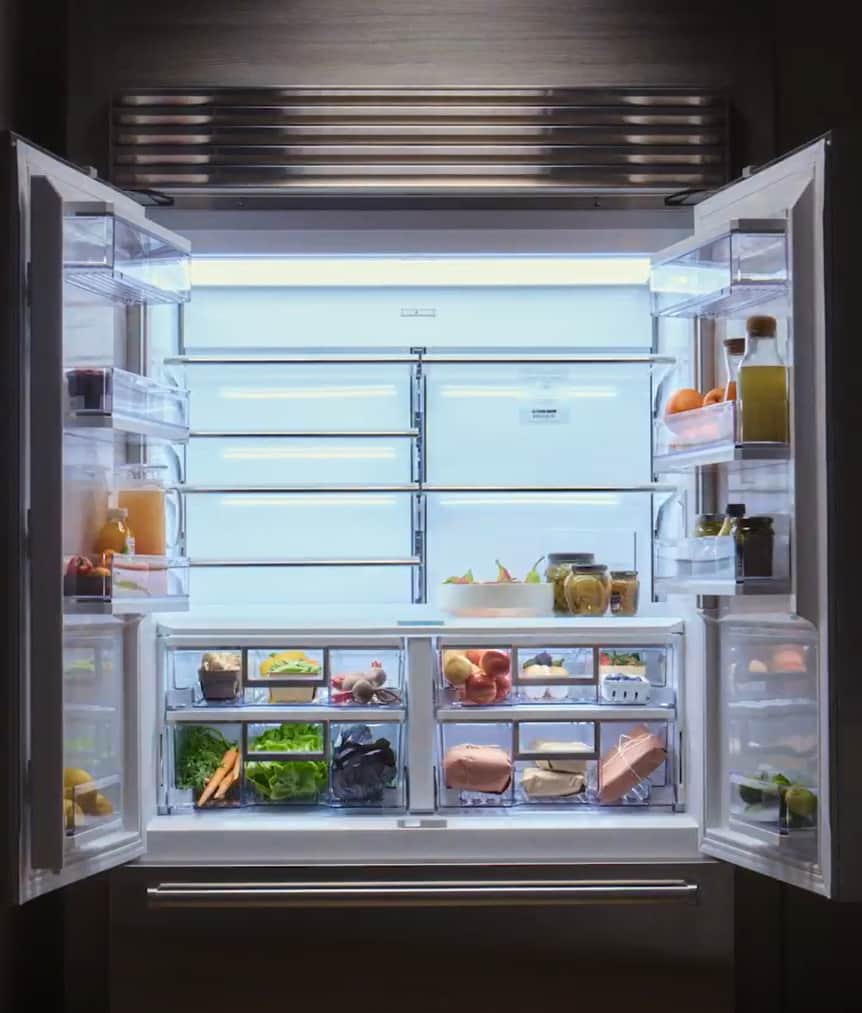
How a Sub-Zero keeps food
Sub-Zero's preservation argument rests on a few systems.
Dual Refrigeration. The Designer Series use and care guide describes separate refrigerator and freezer systems, designed to hold steady temperatures and proper humidity. Sub-Zero says the design keeps fresh food odors out of frozen food and ice, and doesn't freeze the moisture out of the fresh food section. On current Classic and Designer models the maker also names its Split Climate cooling system.
Air purification. Sub-Zero says its air purification system scrubs ethylene and odor from the air every 20 minutes.
The seal. Sub-Zero describes its products as designed for an airtight seal, and its home page names vacuum-sealed doors. You'll notice it: right after you close the door, it can be hard to reopen. Sub-Zero says this can be normal and recommends waiting 30 to 60 seconds for the pressure to equalize.
How long do Sub-Zero refrigerators last
Sub-Zero says its refrigerators are tested to handle at least 20 years of everyday use: "Exhaustive testing on every component ensures your Sub-Zero can handle at least 20 years of everyday use." That's the maker's statement about how it tests, and we report it as theirs. We don't add a lifespan promise of our own. A testing standard is not a guarantee, and the warranty is what you can hold the maker to.
In practice, how long any refrigerator runs well also depends on things you control: the installation, how often the condenser gets cleaned, and whether repairs go to qualified service. The next two sections cover both.
The warranty, as Sub-Zero writes it
The Sub-Zero Residential Limited Warranty printed in the Designer Series use and care guide has three layers, each counted from the date of original installation:
- Full two-year warranty
Covers all parts and labor to repair or replace any part that proves defective in materials or workmanship under normal residential use.
- Full five-year sealed system warranty
Covers all parts and labor for the sealed system parts: compressor, condenser, evaporator, drier, and all connecting tubing.
- Limited twelve-year sealed system warranty
Sub-Zero will repair or replace those same sealed system parts if they prove defective, with Sub-Zero Factory Certified Service doing the work; under this layer the owner pays the labor and any costs other than those parts.
A few terms matter. Warranty service has to be performed by Sub-Zero Factory Certified Service unless Sub-Zero specifies otherwise. Stainless steel doors, panels, handles, frames, and interior surfaces carry a limited 60-day parts and labor warranty for cosmetic defects. Replacement water filters and air purification cartridges aren't covered. The warranty doesn't cover defects caused by improper use, maintenance, installation, service, or repair. Read the guide for your exact model before you buy, since that's the document that governs.
What actually needs maintenance
Sub-Zero's own use and care guide lists the jobs, and none of them are hard.
- Clean the condenser every 6 to 12 months
On Designer Series units the condenser sits behind the kickplate. Turn the power off at the control panel, remove the kickplate, and use a soft bristle brush and a vacuum on the dust and lint. Wear gloves, since the fins are sharp. Sub-Zero warns that skipping this can cause temperature loss, mechanical failure, or damage. Classic and PRO units have their own condenser cleaning instructions, so follow the guide for your model.
- Replace the water filter
Sub-Zero recommends replacing it when the indicator comes on, when water pressure drops noticeably, when ice cubes come out hollow, or every 12 months, whichever comes first.
- Replace the air purification cartridge
It lasts about a year, and the control panel reminds you.
- Check the gaskets
If a door or drawer isn't sealing, Sub-Zero's troubleshooting steps include checking the gasket for rips.
- Before a long trip
Sub-Zero suggests turning the unit off, emptying it, and propping the doors open slightly, then replacing the water filter before start-up.
Sizes and installation formats
Sub-Zero builds four broad formats. Built-in refrigerators (side-by-side, over-and-under, French door) sit at full height in the cabinetry. Columns are all-refrigerator or all-freezer units that you can pair side by side. Integrated units are panel-ready models that sit flush in the cabinetry. Undercounter units fit below the counter for drinks, produce, or a second prep zone.
To give a sense of scale, the 36-inch Designer column refrigerator (DEC3650R) measures 36 by 84 by 24 inches and weighs 485 pounds. Sub-Zero lists a standard opening of 36 inches wide, 84 inches high, and 25 inches deep, calls for a 115-volt, 15-amp dedicated circuit, and notes that 3 1/2-inch finished returns will be visible and should match the cabinetry. Check the delivery path for a unit that size: doors, stairs, and tight turns. Sub-Zero's installation guides say to secure the doors closed and move the unit on an appliance dolly. Our built-in refrigerator rough-in guide covers the opening, water, and power in detail, and you can read how we deliver and install built-in refrigeration.
Panel-ready options
Classic models come in panel-ready versions, and Designer models are panel-ready by default. Sub-Zero publishes its panel width, height, weight, and thickness requirements through its Reveal tool, and your cabinet maker should build to those. For the same question across brands, see how panel-ready refrigerators fit cabinetry.
Trade-offs to know before you buy
- Upkeep. The condenser needs cleaning every 6 to 12 months, and Sub-Zero warns that skipping it can cause temperature loss or failure.
- Who can service it. Warranty work goes through Sub-Zero Factory Certified Service unless Sub-Zero specifies otherwise.
- The door seal. Right after closing, a door can be hard to reopen for 30 to 60 seconds while the pressure equalizes. Sub-Zero says this can be normal.
- Installation. A 36-inch Designer column weighs 485 pounds and needs a dedicated circuit, a water line, and an opening built to the guide.
- Panels. PRO is stainless only, so it can't disappear into cabinetry.
Who each collection suits
- Classic fits a kitchen where the refrigerator is meant to be seen, or one where a full-size built-in needs to go in stainless or panels.
- Designer fits a kitchen where refrigeration should vanish into the cabinets, or a plan that spreads cold storage around: columns, undercounter units, and wine storage in different spots.
- PRO fits a cook who wants stainless inside and out and a glass door option, and doesn't need a panel.
Whichever collection you lean toward, the plan comes first: width, format, panel or stainless, and where the condenser access will be. For the wider category, see built-in refrigeration by format.
Questions to ask in the showroom
- Which collection fits my kitchen: a visible Classic, a paneled Designer, or a stainless PRO?
- What opening and finished returns does this model need, and does my cabinet plan allow for them?
- Is a dedicated circuit in place, and where does the water line come in?
- Where is the condenser on this model, and how will I reach it for cleaning?
- Can the delivery path handle the unit's weight and size?
- Which warranty document applies to this exact model?
Next steps in the Sacramento area
Sacramento-area buyers can start with our Sub-Zero refrigerators in Sacramento page. Bring your cabinet drawings and opening measurements to the Roseville showroom, and we'll pull the spec sheet and installation guide for the model you're considering and go through them with you. To see how Sub-Zero looks once the cabinetry is finished, visit Sub-Zero columns and built-ins in finished Design Gallery kitchens.