What panel-ready actually means
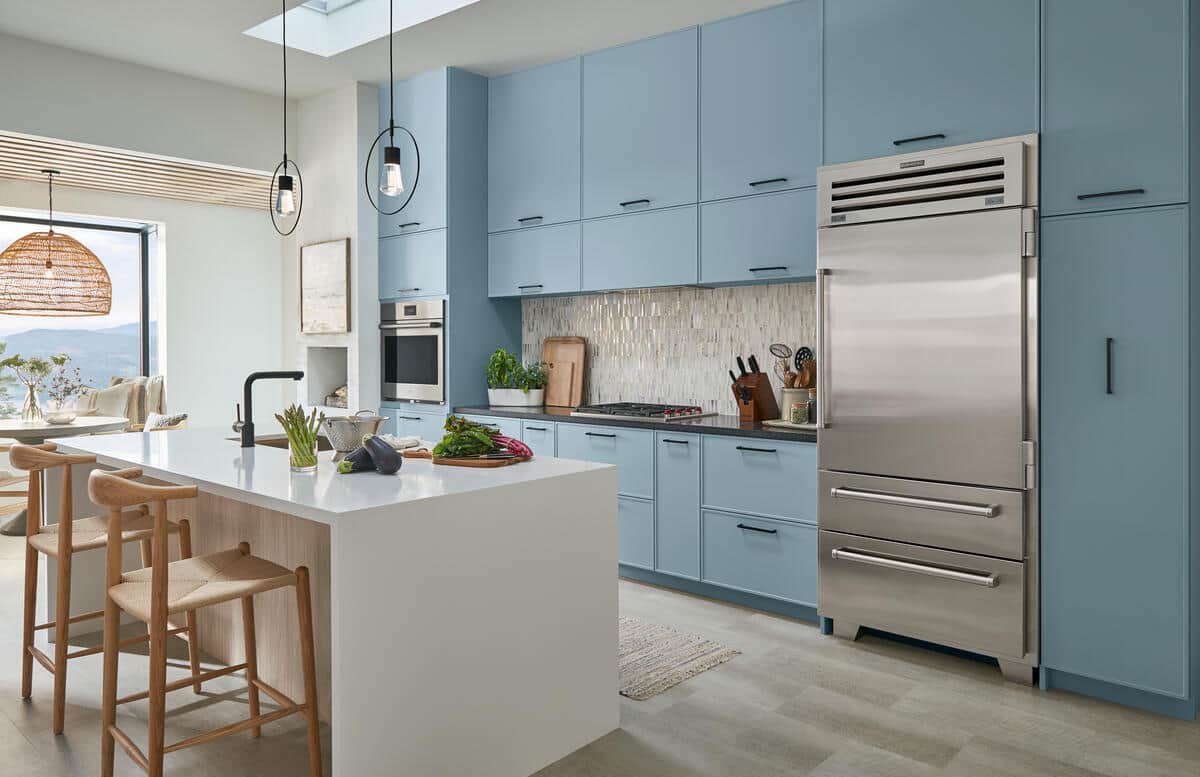
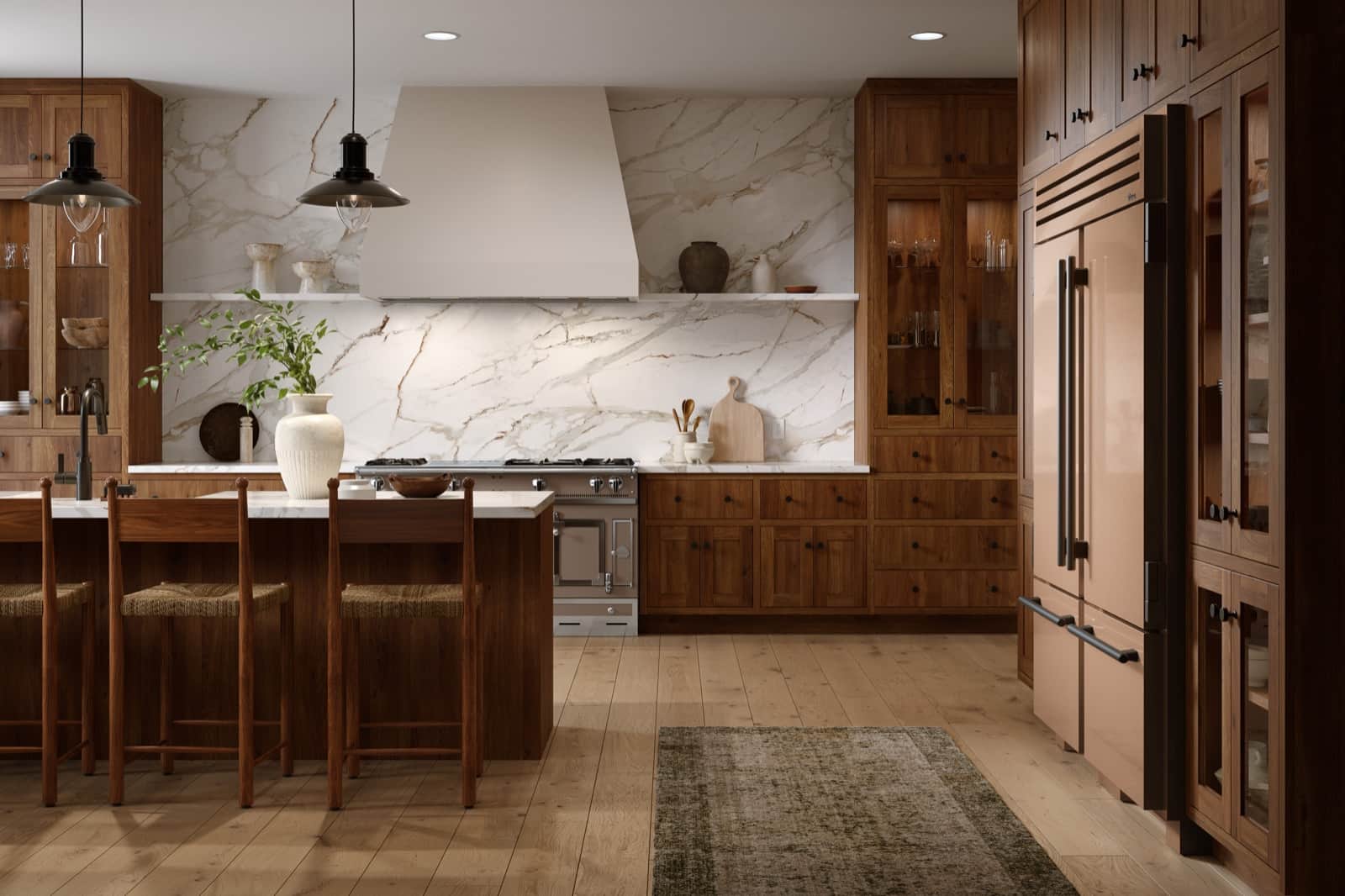
A panel-ready refrigerator ships without a finished front. Instead of stainless or a factory door, the unit accepts a custom panel that your cabinet maker builds from the same material as the surrounding cabinetry. The appliance disappears into the run of cabinets. From across the room, the refrigerator reads as another door and drawer front.
Two levels exist. Overlay panels sit slightly proud of the cabinet faces and match your door style closely. Fully integrated units sit flush, with the panel, hinges, and gaps engineered so the appliance lines up exactly with adjacent cabinetry. Sub-Zero, Thermador, and True Residential all build integrated refrigeration designed for this flush look.
Columns, French-door, and undercounter formats
Panel-ready comes in several body types, and the format drives the whole layout.
Columns are single-temperature towers. You can place an all-refrigerator column next to an all-freezer column, or split in refrigeration and wine as separate tall units, each behind its own cabinet panel. This is the most flexible integrated approach and the reason many designed kitchens use columns.
French-door and bottom-freezer panel-ready models put fresh food up top behind two doors and a freezer drawer below, all accepting panels. Undercounter units are the compact pieces: refrigerator drawers in an island, a beverage center near the coffee station, or an undercounter wine unit. True Residential and Sub-Zero both build undercounter refrigeration meant to take a custom front.
The shortlist: choose the body type, then the panel follows
- Columns, the most flexible integrated approach
Single-temperature towers: an all-refrigerator beside an all-freezer, or refrigeration and wine as separate tall units, each behind its own panel.
- French-door and bottom-freezer
Fresh food up top behind two doors, a freezer drawer below, all accepting panels.
- Undercounter
The compact pieces: refrigerator drawers in an island, a beverage center by the coffee station, an undercounter wine unit. True Residential and Sub-Zero both build these to take a custom front.
It disappears into the run.
How the panel is built and sized
The appliance sets the rules. Each model publishes a panel specification that fixes panel height, width, thickness, and weight, plus the handle location and how the panel mounts to the door. Your cabinet maker builds to that spec, not the other way around.
Weight matters. A tall column panel in a thick door style can be heavy, and the hinge is rated for a maximum panel weight. Stay under that number or the door will sag over time. Confirm the handle plan early too, since an integrated look often uses a routed edge pull or a handle that matches the cabinetry hardware rather than a factory grab bar.
Cooling that holds up behind a panel
A flush front cannot compromise the cooling, so look at how the unit manages temperature and air. Dual refrigeration, where the fresh-food and freezer sections run on separate sealed systems, keeps freezer odors out of the fresh food and holds humidity higher for produce. Sub-Zero built its reputation on this dual approach. For how Sub-Zero and Thermador compare across cold and cooking, see the Sub-Zero vs Thermador guide.
Air purification and tight humidity control extend how long food lasts, which is the practical payoff of the format beyond looks. Ask how each unit filters air and whether the crisper zones control humidity independently.
Planning the install with your cabinet maker
Panel-ready is a coordination job as much as an appliance choice. Bring the appliance spec sheets to your cabinet designer before the cabinets are ordered. The rough opening, the electric and water rough-ins, the door swing and required side spacing, and the panel dimensions all have to be settled on paper first. It is worth booking a showroom visit while the drawings are still open to change, because a panel decision is far cheaper to make than to unmake.
Get the reveal right. Integrated units depend on consistent gaps between the appliance panel and the neighboring cabinet doors. That reveal is designed, not accidental, and it is far easier to plan than to fix after cabinets hang.