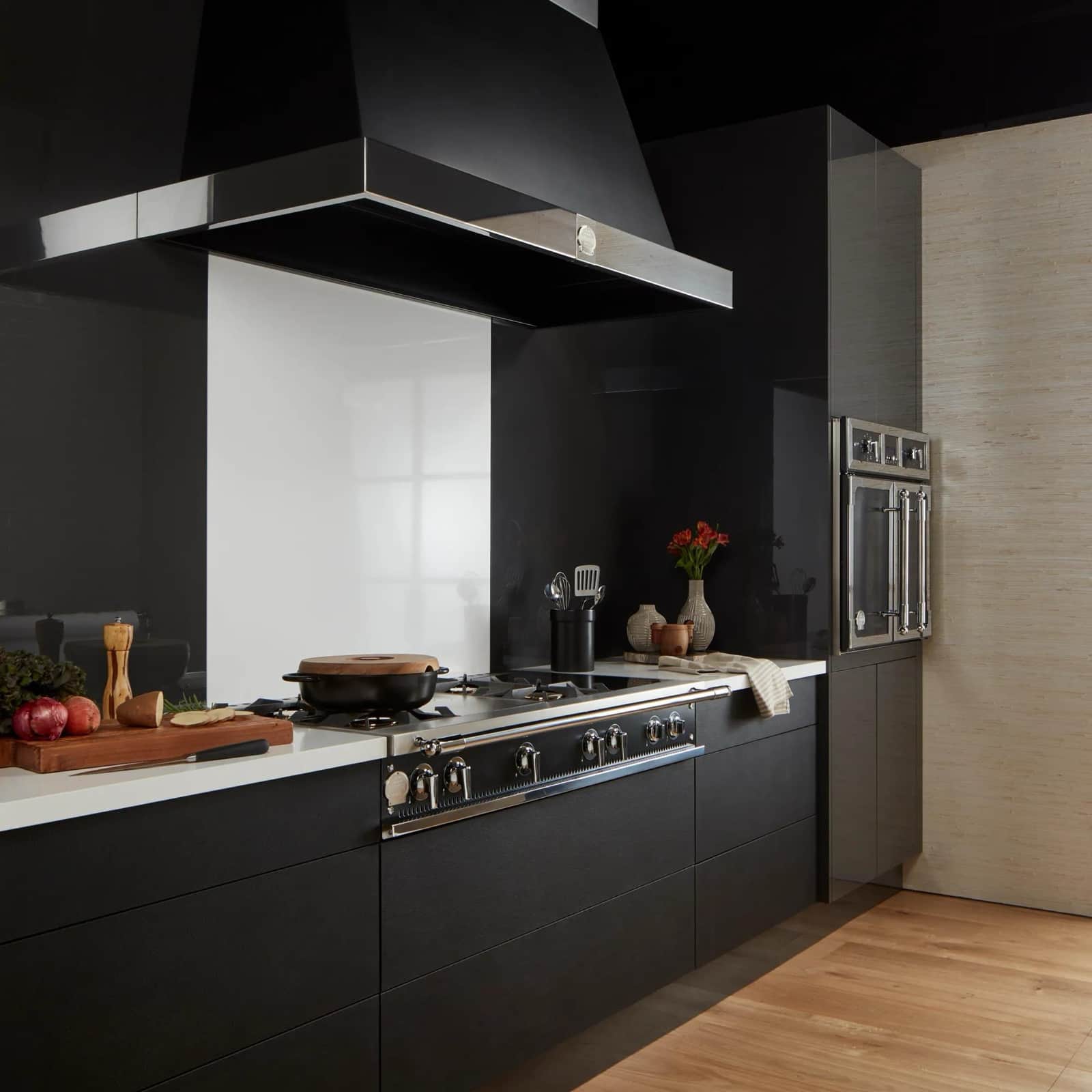
How each range makes heat
A gas range burns fuel under the pan. Flame heats the grate and the pan bottom, and some of that energy escapes around the sides of the cookware into the room. You are heating metal, air, and the pan.
Induction skips the flame. A copper coil under the glass generates a magnetic field, and that field induces an electric current directly in the steel or iron of the pan. The pan itself becomes the heat source. The glass surface only warms from contact with the hot pan, not from any element of its own. Because the energy goes straight into the cookware, roughly 85 to 90 percent of it reaches the food, against about 40 percent for open gas.
Speed and heat control
Induction brings water to a boil noticeably faster than gas, often cutting boil time close to in half on a full pot. The response is instant. Move the setting down and the magnetic field weakens the same moment, so a pan drops off a hard boil without the lag you feel over a dying flame.
Gas gives you a flame you can see and read at a glance, which many cooks trust for judgment work like searing or holding a low simmer. The trade is precision at the very bottom of the range. A gas simmer flickers and cycles. Induction holds a steady low output for melting chocolate or tempering a sauce without hot spots.
Induction and gas, side by side
| Criterion | Induction | Gas |
|---|---|---|
| How the heat is made | A magnetic field induces a current in the pan, so the pan itself becomes the heat source. | A flame heats the grate and the pan bottom, and some energy escapes around the cookware. |
| Energy reaching the food | Roughly 85 to 90 percent. | About 40 percent on open gas. |
| Response | Instant. Drop the setting and the field weakens the same moment. | A flame you can see and read at a glance, with lag as it dies down. |
| At the low end | Holds a steady low output for melting chocolate or tempering a sauce. | A simmer that flickers and cycles. |
| Cookware | Magnetic pans only: cast iron, carbon steel, most stainless. A magnet must grab the base. | Any cookware, including copper and pure aluminum. |
| Kitchen air | No combustion at the cooktop. A hood still clears steam and smoke from the food. | Combustion releases nitrogen dioxide, so a strong vent hood matters more. |
| Cleanup | One flat pane. Spills sit on a cool surface and wipe off. | Grates and burner caps lift out for washing: more parts, more time. |
| Install | A dedicated 240-volt circuit, so a switch from gas usually means an electrician. | A gas line, plus electric power for the oven on a dual-fuel setup. |
Every row restates this guide. No figure appears here that the sections above do not establish.
The pan is the heat source.
Cookware that works, and what does not
Induction needs magnetic cookware. Cast iron, carbon steel, and most stainless steel work. Test a pan by sticking a refrigerator magnet to its base: if it grabs firmly, the pan will heat. Aluminum, copper, and glass cookware will not work unless they carry a bonded magnetic layer in the base.
Gas takes any cookware, including copper and pure aluminum, which is why some cooks with a large legacy set lean gas. If a switch to induction is on the table, plan for the pans as part of the change.
Safety and indoor air
Induction glass stays cool except where the pan sits, and it shuts off when the pan is lifted, so there is no open flame and no gas line in the kitchen. That matters in homes with young children.
Gas combustion releases nitrogen dioxide and other byproducts into the kitchen, which is why a strong vent hood matters more over gas. Induction produces no combustion at the cooktop, though a hood still clears steam and smoke from the food itself.
Cleanup, install, and running the appliance
Induction is a flat sheet of glass. Spills sit on a cool surface and wipe off, since nothing bakes onto a cold pane. Gas grates and burner caps lift out for washing, which is more parts and more time.
Install differs. Induction needs a dedicated 240-volt circuit, so a gas-to-induction switch usually means an electrician. Gas needs a gas line and, for dual-fuel setups, electric power for the oven. On running the appliance, electric rates and gas rates vary by region, and gas is often cheaper to operate per meal in areas with low gas rates, while induction wastes less energy overall. Weigh both against your utility rates.
Both fuels come in wide pro formats, and if you are weighing a larger range the 48-inch range guide covers burner and griddle layouts at that width. DreamHome Appliance Group serves two metros, with a Roseville showroom for the Sacramento area and a Post Falls showroom for Spokane and Coeur d'Alene.