How to Choose a Range Hood
On this page
To choose a range hood, size the capture area first: the hood should be at least as wide as the cooking surface, wider over an island, deep enough to reach the front burners, and mounted at the height its maker recommends. Then match the blower's CFM to what you cook on and how far the air has to travel through the duct.
Capture area comes before CFM
A hood can only exhaust the smoke it catches. Steam and grease rise and spread, so the canopy has to be big enough and low enough to collect them. Vent-A-Hood puts it plainly in its owner's guide: hoods only collect cooking vapors, and they won't pull contaminants back once they escape into the kitchen. That's why a bigger blower can't rescue a hood that's too small or too high.
Here's what the makers ask for.
- Width
Wolf says a wall hood should be at least as wide as the cooking surface, and that a wider hood increases the capture area where space allows. Zephyr says the hood width should equal the width of the cooktop or range. Over a 36-inch range, that means a 36-inch hood at minimum, and 42 inches if you want the 3-inch overhang Vent-A-Hood recommends on each side.
- Overhang
Vent-A-Hood recommends overlapping the cooking equipment by at least 3 inches on each side whenever possible, and calls it mandatory for islands.
- Islands
Wolf says island and peninsula installations need more capture area, and that an island hood should exceed the cooking surface by at least 3 inches on each side.
- Depth
Vent-A-Hood says the hood should project out to the front edge of the front burners. Zephyr asks for a hood that covers the rear burners and at least half of the front burners.
- Height and width together
Zephyr says that for every 3 inches beyond the recommended mounting height, you should increase the hood width by 3 inches on each side. Vent-A-Hood notes that the deeper the hood, the higher it can hang and still work.
Heavy cooking raises the bar. Wolf says high heat or aromatic foods may call for more CFM and a hood that exceeds the cooking surface by 3 inches on each side.
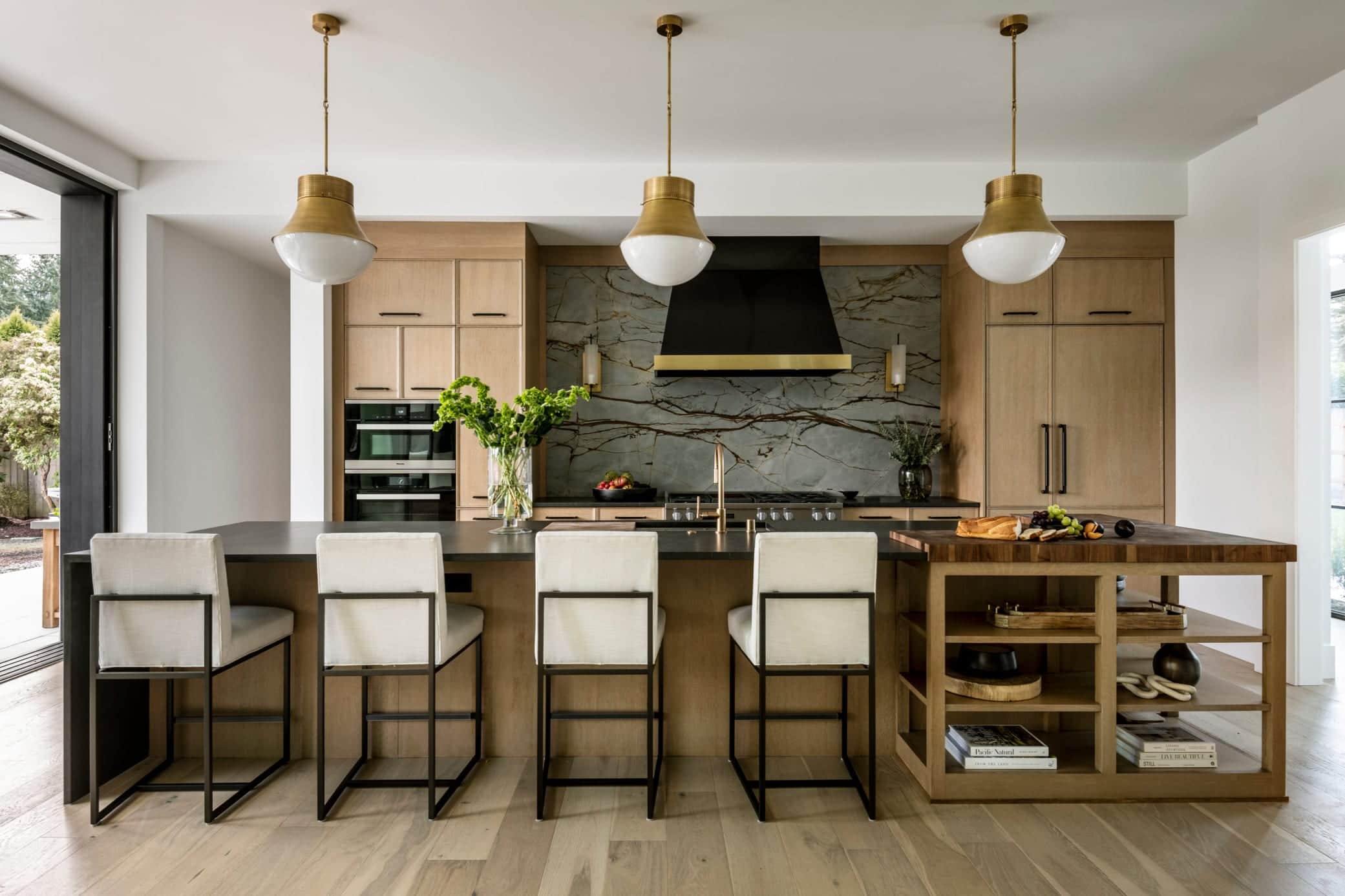
What size range hood do I need?
Start from the cooking surface. The makers quoted above ask for a hood at least as wide as the range or cooktop, 3 inches wider on each side over an island, deep enough to reach the front burners, and mounted at the height the maker lists. Then take the CFM from your burners or from your range maker's chart. For a quick check of those numbers, use our range hood size calculator.
Wall, island, liner, or downdraft
Wall hoods need less extra width than island hoods, because the wall blocks cross drafts on one side; Wolf says island and peninsula installations require a greater capture area. Island hoods hang in open air and need the extra width above. Liners (some makers call them inserts) fit inside a custom hood made of wood, plaster, tile, or metal. Wolf says the decorative hood's shape isn't critical as long as the liner fits completely inside and the two meet at the bottom edge in width and depth, so choose the liner before the shell is built.
Downdraft systems rise from the counter and pull vapors sideways and down. Wolf says an overhead hood is typically more effective because cooking vapors rise naturally, and calls downdraft a great option where an overhead hood isn't wanted or won't fit. A downdraft's width should match the cooktop's. Elica takes another route with its NikolaTesla induction cooktops, which have an extraction system built into the cooking surface.
Recirculating hoods filter air through charcoal and return it to the room. Wolf says this approach won't remove heat, moisture, or combustion gases, is less effective on odors and smoke, and should be used where ducting outside isn't possible and local codes allow it. Wolf also says recirculating units shouldn't be used with ranges or rangetops that have a charbroiler or griddle.
Range hood CFM
CFM, cubic feet per minute, is how much air the blower moves. There are two common ways to estimate it.
- From the burners
Zephyr's rule for gas is to divide the total BTUs by 100. For electric, Zephyr multiplies the linear feet of cooking surface by 150. It also says a hood should exchange the kitchen's air at least 15 times per hour.
- From the maker's chart
Some range makers publish their own numbers. Wolf's ventilation guide suggests 500 CFM for its 30-inch gas range, 800 for 36-inch, 1,100 for 48-inch, and 1,500 for 60-inch, and 300 for its 30- and 36-inch induction ranges. Wolf adds that long duct runs and ranges with a charbroiler or griddle may need more.
Vent-A-Hood's owner's guide matches a 300 CFM blower to standard 4-burner cooking, 600 CFM to standard and pro-style ranges, and 900 or 1,200 CFM to larger pro-style ranges.
More CFM has trade-offs. A bigger blower needs duct sized to carry the air, and it can trigger make-up air requirements, covered below. Size it to the cooking, then stop. See induction or gas for your cooktop for how fuel changes the number, and planning around a 48-inch range for larger ranges.
Where the blower lives
Wolf ships its hoods without a blower so you can choose one of three positions on most models. An internal blower sits inside the hood. An in-line blower sits in the duct between the hood and the outside wall. A remote blower mounts on the roof or an exterior wall. Wolf says a remote blower is recommended if noise is a concern, and that it reduces blower noise without eliminating it.
Noise and filters
Hood noise is usually listed in sones on the spec sheet, and a lower number is quieter. Compare ratings for the exact model and blower position you're weighing, at the speed you'll actually cook on, since moving the blower out of the hood changes what you hear at the range. Filters differ by maker: Vent-A-Hood says its Magic Lung blower traps grease without wire mesh or baffle filters, and other makers state the filter type model by model. Ask us for the spec sheets that list each model's sone rating and filter.
How high above the cooktop does the hood go?
The hood's maker sets the height, and the number depends on the hood type. Wolf measures from the bottom of the hood to the countertop and gives these ranges in its ventilation guide.
- Pro wall and island hoods 30 to 36 inches.
- Cooktop hoods and under-cabinet inserts 24 to 36 inches.
- Ceiling-mounted hood 36 to 84 inches.
- Outdoor wall hood 36 to 42 inches.
Wolf says a hood mounted too low can restrict access to the cooking surface, and one mounted too high can compromise performance. Vent-A-Hood's owner's guide lists recommended maximum heights off the cooking surface: 30 inches for its wall and island hoods, 24 to 27 inches for standard liners, 27 to 30 inches for pro liners, and 21 to 27 inches for under-cabinet hoods, depending on hood height. Because makers name different reference points, read the mounting section of the guide for the hood you are buying. Your range's own installation guide may add its own requirements, so read both before the cabinets or the ceiling are finished.
Planning the install
Range hood installation goes smoothly when the hood, the duct path, and the cabinets are drawn together.
- Mounting height
Follow the hood's own installation guide. Wolf recommends 30 to 36 inches from the countertop to the bottom of its pro hoods, 24 to 36 inches for its cooktop hoods, and 36 to 84 inches for its ceiling-mounted hood. Vent-A-Hood lists recommended maximums of 30 inches for its wall and island hoods and 21 to 27 inches for its under-cabinet hoods. Mount it too low and it gets in the way of the cooktop; mount it too high and it catches less.
- Ceiling height
Add the floor-to-counter height, mounting height, and hood height. Wolf fills any gap above with a flue extension or duct cover.
- Duct size
Wolf recommends 6-, 8-, or 10-inch duct depending on the product and says smaller duct will significantly reduce performance. Vent-A-Hood says the duct should match or exceed the hood discharge's square inch area for the full run, and should be enlarged for longer runs.
- Duct run
Use rigid, smooth-walled metal duct. Both Wolf and Vent-A-Hood rule out flexible or corrugated duct. Wolf says its hoods work most efficiently with a run of 50 feet or less, and asks, whenever possible, for at least 15 inches of straight duct between elbows and transitions.
- Elbows and caps count
Wolf converts each fitting into equivalent feet of straight duct. A 90-degree elbow counts as 24 feet in 6-inch duct but 3 feet in 10-inch duct. A wall or roof cap counts as 60 feet at 6 inches and 9 feet at 10 inches. A short run through small duct can perform like a long one.
- Power
Wolf calls for a separate grounded electrical supply and says a GFCI is not recommended on its indoor hoods. Have a licensed electrician confirm the circuit.
Make-up air and the building department
A strong hood pulls air out of the house, and that air has to come back from somewhere. Wolf says make-up air may be required and tells you to consult a qualified HVAC professional. Zephyr notes that many local codes limit hood airflow to 400 CFM if no make-up air kit is used. Your local building department decides what applies to your home, so ask before you settle on a blower, and have a licensed HVAC contractor design any make-up air system.
If you're also planning a pro-style range, our gas supply and spacing checklist for pro-style ranges covers the range side of the same wall. For what happens after the order, see delivery and installation once the hood is chosen.
Does a gas range or induction range need a hood?
Wolf says it does not require a ventilation system above a cooking unit, and that it always recommends one to reduce odors, smoke, steam, and similar byproducts. Wolf also says to follow local codes and to confirm that the cooking appliance still meets its distances to combustible materials without a hood. The same Wolf page speaks of a cooking unit without singling out gas, and Wolf's ventilation guide gives a suggested 300 CFM for its 30- and 36-inch induction ranges, so its induction ranges appear in the same chart that sizes its gas ranges. Other makers set their own terms, so read the installation guide for your model, and ask your local building department what applies to your home.
The ventilation lines we carry
Wolf builds cooktop hoods, pro wall and island hoods, hood liners, ceiling-mounted hoods, downdrafts, and an outdoor wall hood, with internal, in-line, or remote blowers.
Vent-A-Hood builds its hoods around the Magic Lung blower. The company says the Magic Lung traps 99% of cooking grease without wire mesh or baffle filters.
Zephyr introduced its Amalfi and Como wall hoods in October 2025, each with a 600-CFM internal blower and what Zephyr calls Airflow Control Technology.
BEST builds built-in, chimney, downdraft, outdoor, and pro-style hoods.
Elica designs its appliances in Italy and offers wall-mount, island, ceiling, downdraft, outdoor, insert, and under-cabinet hoods, plus the NikolaTesla cooktops.
Trade-Wind and Sapphire are also on our line card. Ask us for current spec sheets if either is on your list. Our hood types we carry page shows the full category, and the rest of our buying guides cover the appliances underneath.
Questions to ask in the showroom
- How wide is my cooking surface, and how much wider should the hood be for my wall or island?
- What CFM does my range or cooktop maker suggest?
- How long is my duct run once the elbows and cap are counted?
- What duct size does this hood need, and will it fit through the joists or wall?
- Will my blower size trigger a make-up air requirement where I live?
- Internal, in-line, or remote blower, and how loud will each be where I stand?
Next steps in the Sacramento area
Bring your range or cooktop model, your ceiling height, and a sketch of the duct path to our Sacramento-area store for hoods and ranges in Roseville. We'll pull the current installation guides for the hoods you're weighing and size the capture area and blower with you before anything is ordered.
Updated