 Fisher & Paykel
Built-In Wall Ovens
Why a wall oven
A wall oven takes the oven out from under the burners and sets it into a cabinet column at a height you can reach without bending. That one move opens the plan: the cooking surface can go on an island as a cooktop or rangetop, two ovens can stack in the space one range would take, and a steam or speed oven can join them in the same column. A range keeps everything in one appliance and one footprint, which suits many kitchens; the wall oven vs range guide weighs the two, and the ranges page covers the other side.
Single, double, combination and triple
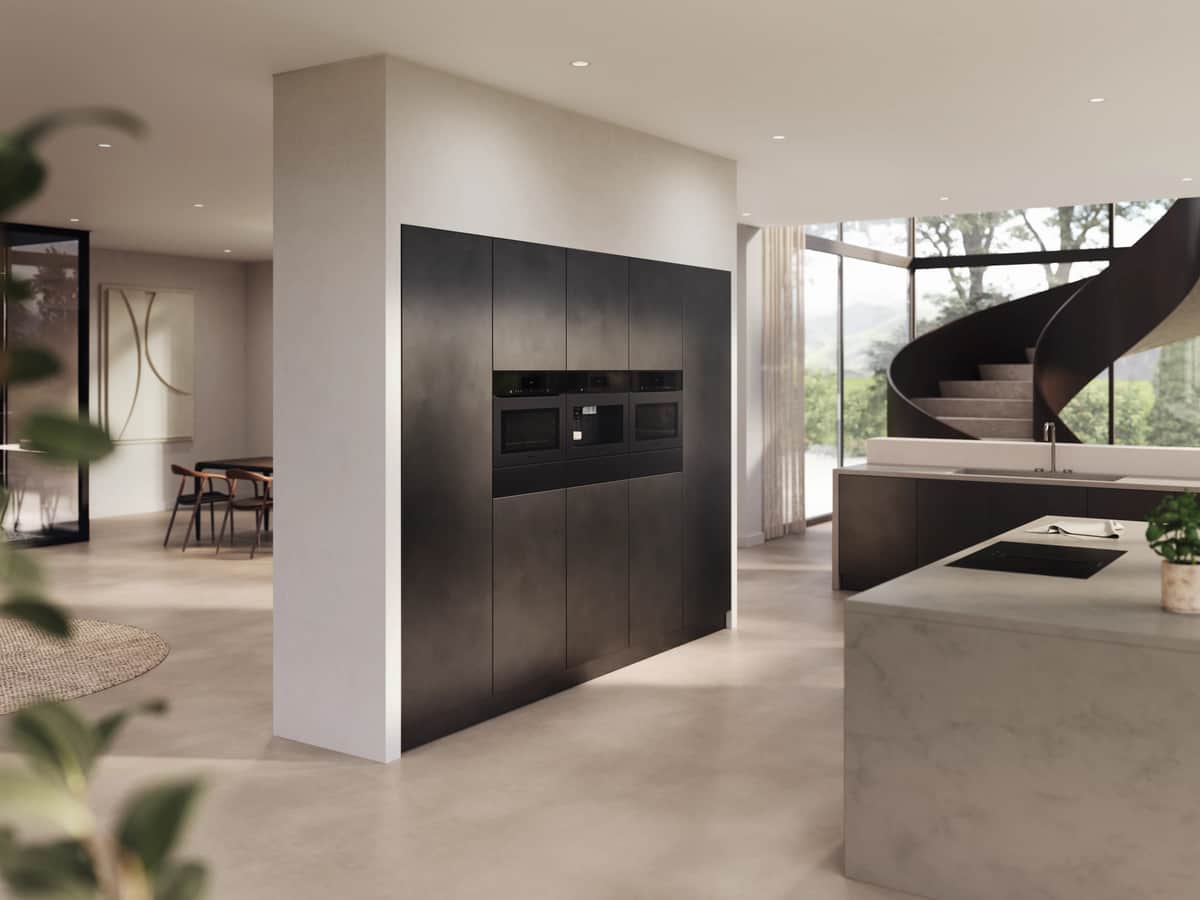
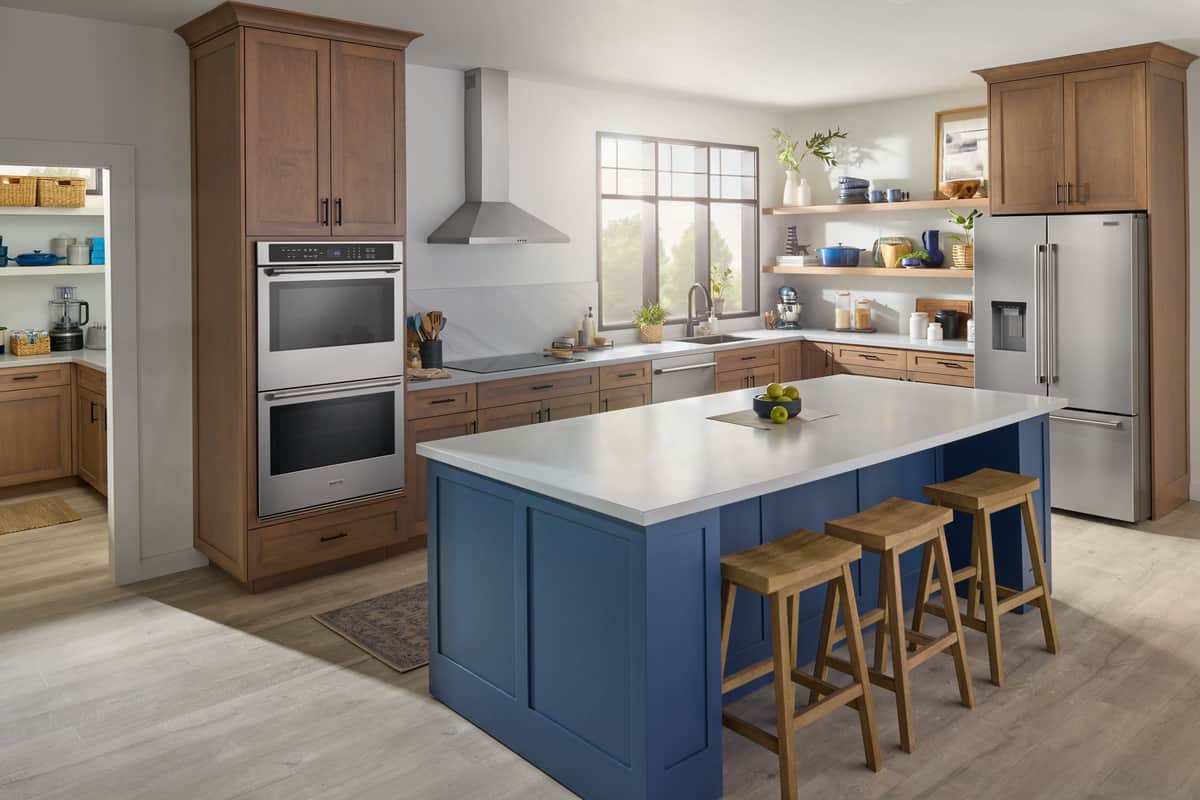
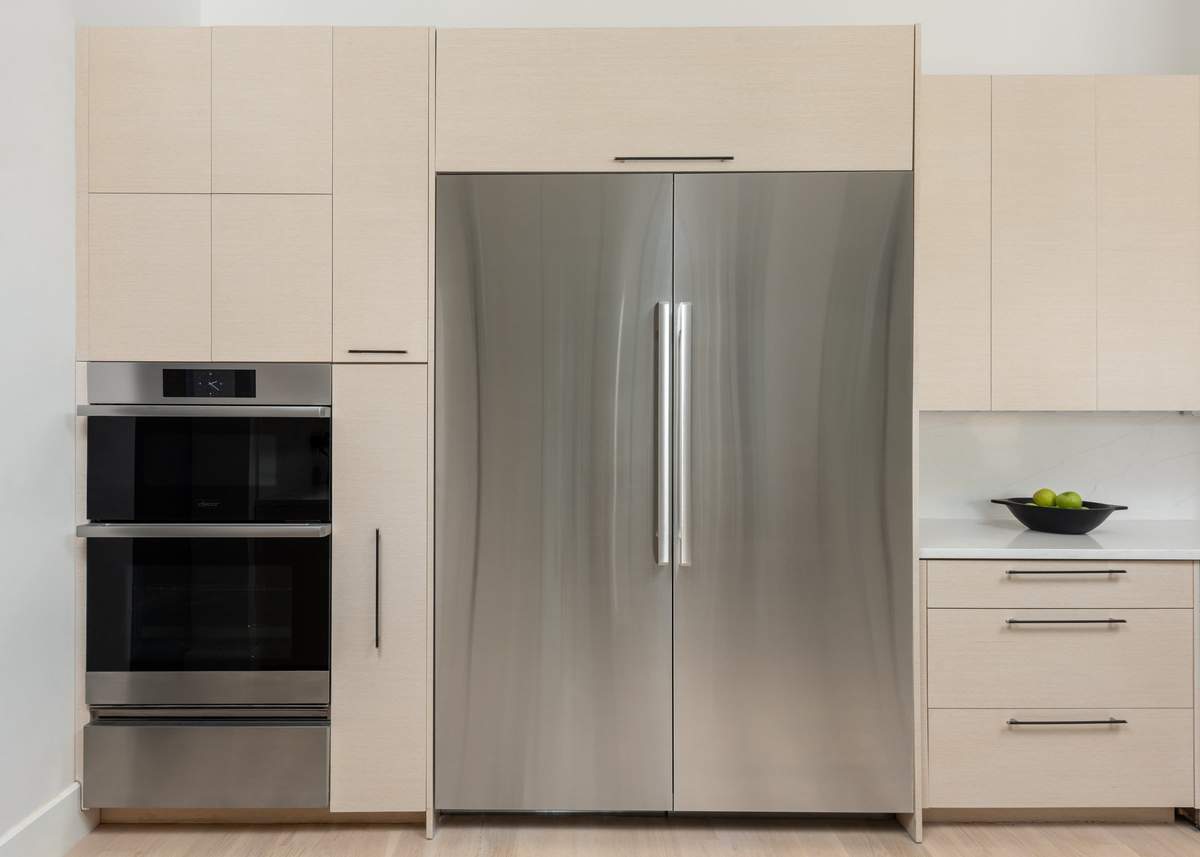
Most columns start from one of four formats. A single oven is one cavity; a double oven stacks two full cavities so two dishes cook at different temperatures. A combination wall oven pairs a full oven with a microwave or speed oven above it, and Thermador lists a Masterpiece combination wall oven at 30 inches alongside its single, double and triple ovens. Viking adds French door single and double ovens, whose two side-hinged doors open with one pull. A warming drawer beneath the column holds plates and finished dishes; Thermador lists warming drawers with its ovens. The wall oven and microwave combo guide covers the combination format in detail.
Steam ovens and speed ovens
Beyond the convection oven, two cavities change how a kitchen cooks. Wolf lists convection steam ovens and convection speed ovens beside its convection ovens, and Fisher & Paykel labels the same pair as combi steam and combi speed. A steam oven adds moisture for bread, fish and reheating without drying; a speed oven adds microwave energy to convection heat so it browns and cooks fast, and often replaces a separate microwave. Gaggenau lists combi-steam and combi-microwave ovens, and Miele builds ovens for the same column. The steam vs convection oven guide and the speed oven vs microwave guide explain when each earns its place in the column.
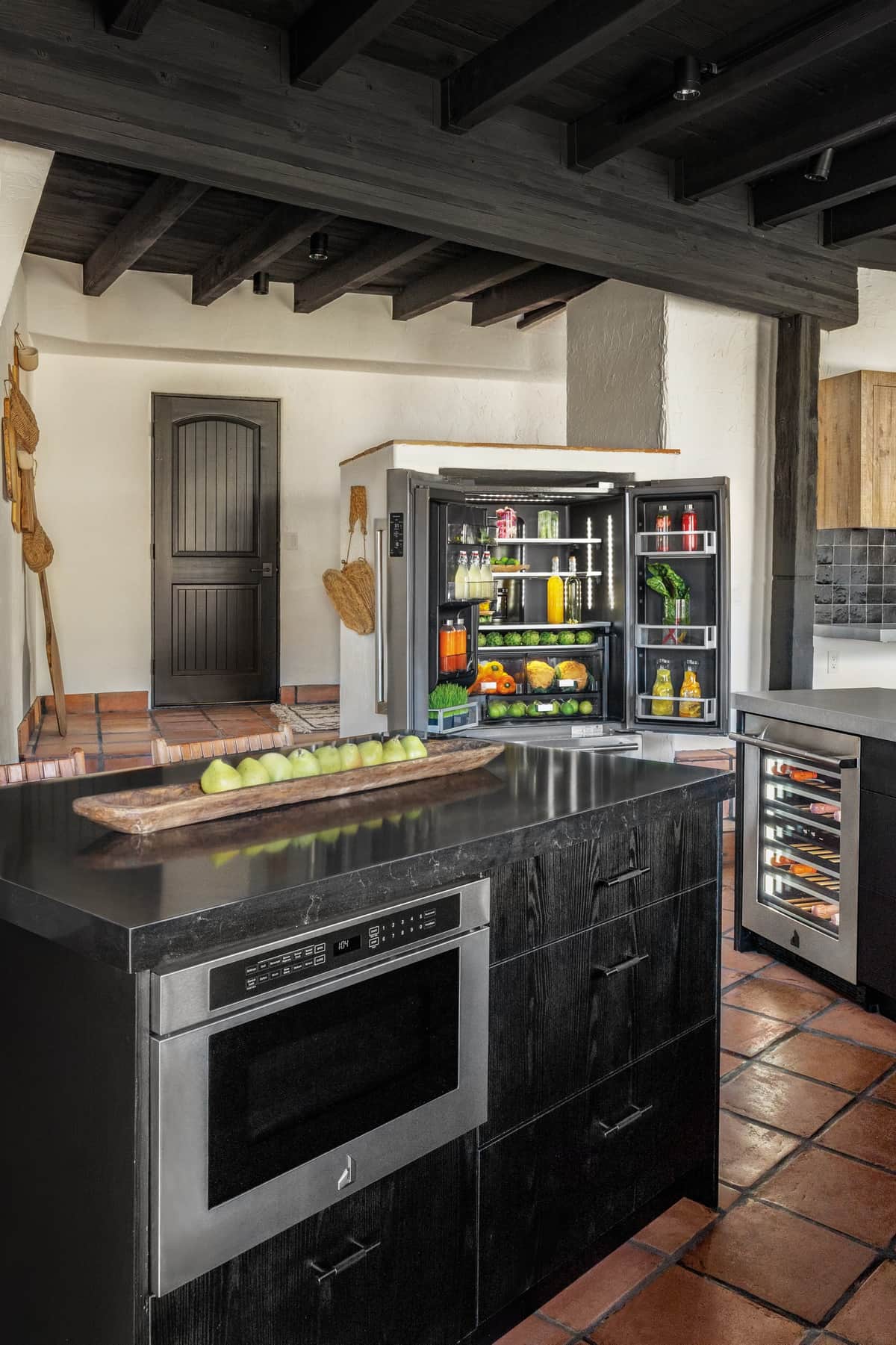
Widths: 24, 27, 30 and 36 inch
Thirty inches is the common width: Wolf, Thermador, Fisher & Paykel and Viking all list it. Wolf and Fisher & Paykel also list 24 inches, Viking lists 27 inches, and Gaggenau's lineup includes a 36-inch oven, the EB 333. Thermador lists its wall ovens at 30 inches. A 24-inch oven fits a narrower column or a European-style run of matching units. The nominal width is not the cutout, so the wall oven installation guide walks through cutout dimensions and the clearances the maker specifies before the cabinet is ordered.
Planning the oven column
Set the main oven where the door opens at or just below counter height, so a heavy pan comes out level with your hands, and place the second cavity above or beside it. A double oven needs a tall column; a single oven over a warming drawer or beneath a speed oven fits a shorter one. Match the finish and handle line across the column so stacked units read as one piece, and confirm the electrical supply each unit lists before the cabinetry is built. Opening oven doors and comparing handle heights in person settles most of these questions, at the Roseville showroom in the Sacramento metro.
Wall oven questions
Single or double wall oven?
A single wall oven suits a kitchen that bakes one thing at a time or pairs the oven with a steam or speed oven. A double wall oven stacks two full ovens so a roast and a tray of vegetables can run at different temperatures. Both fit the same cabinet width; the double needs a taller opening.
What is a combination wall oven?
A combination wall oven stacks a full oven with a second appliance in one unit, usually a microwave or a speed oven above the main cavity. It saves a cabinet compared with two separate units.
What width is a standard wall oven?
Thirty inches is the common width: Wolf, Thermador, Fisher & Paykel and Viking all list it. Wolf and Fisher & Paykel also list 24 inches, Viking lists 27 inches, and Gaggenau's lineup includes a 36-inch oven, the EB 333. The cabinet cutout differs from the nominal width, so read the installation guide of the exact model.
Does a wall oven need its own circuit?
Most electric wall ovens are hard-wired on a dedicated circuit. The installation guide of the exact model states the requirement; have a licensed electrician confirm it before the cabinet is built, and follow local code.
Open the doors and compare oven columns in person at the Roseville showroom.