Best Built-In Coffee Makers
On this page
A built-in coffee maker is a decision about water, cabinet space and cleaning before it is a decision about coffee. The best one for you is the one whose water connection, opening and cleaning routine fit your kitchen and your mornings. This guide sorts built-in coffee systems by those points, using what Wolf and Miele state on their own pages.
Plumbed or reservoir
The first split is how the water gets in.
- Reservoir. You fill a water tank by hand. Wolf's coffee system works this way: "Install the Wolf coffee system anywhere (kitchen, study, rec room) without additional plumbing." Its reservoir holds 84.5 fluid ounces, "enough for 6 cups of 9 oz coffee." That makes the system easier to place, because it needs no water line, and it means someone has to refill the tank.
- Plumbed. The machine connects to a water line, so there is no tank to fill. Miele lists a CVA 7845 built-in coffee machine with a water connection, and its installation drawings mark both an electric connection and a water connection.
A plumbed machine adds work: a licensed plumber has to bring a supply to the cabinet and confirm the connection against your local building department's requirements. A reservoir machine skips that step. If the machine will sit in a wall column far from a sink, the reservoir route may be simpler. If it sits near a sink and you want no refilling, plumbed deserves a close look.
Where it sits in the wall
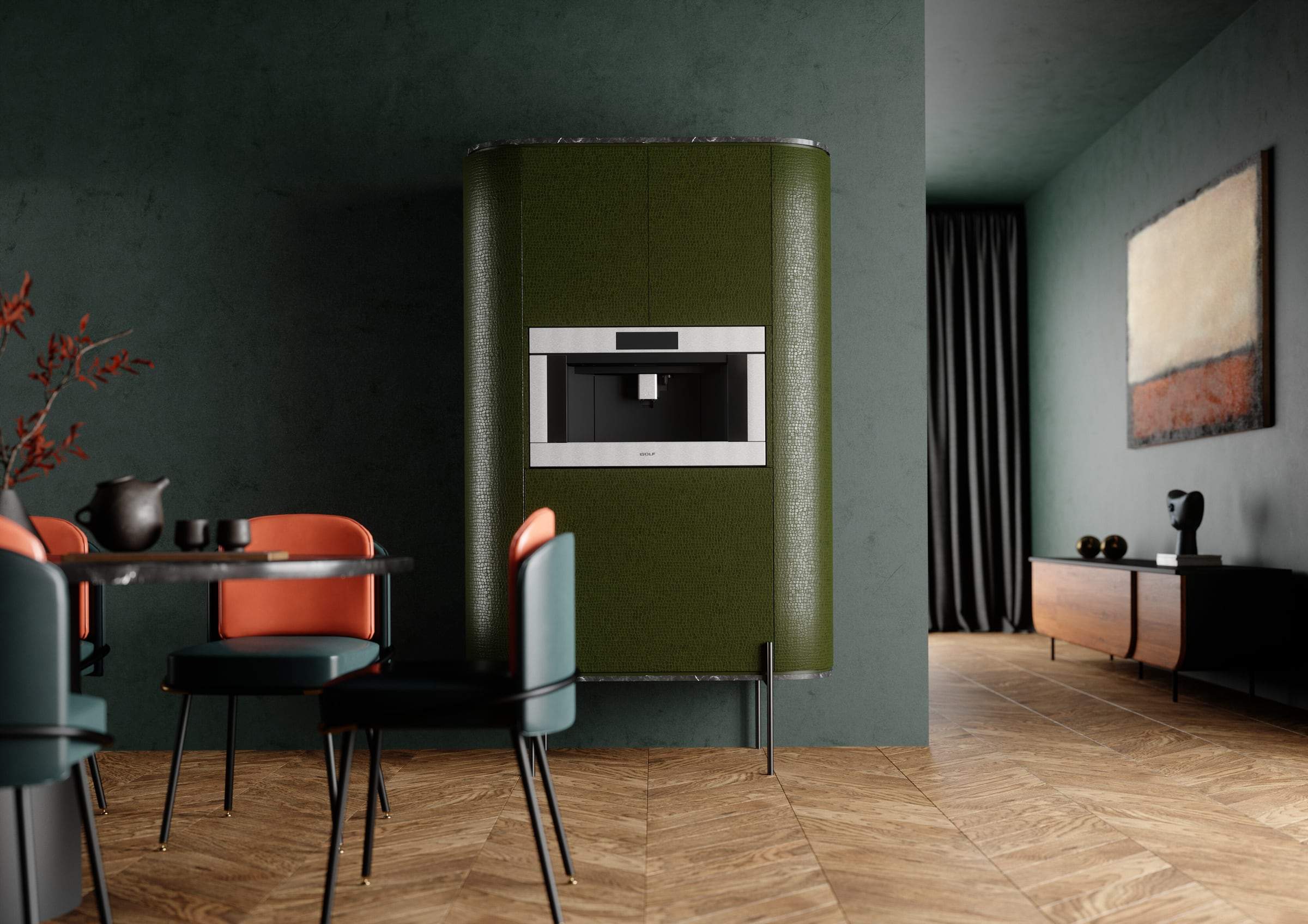
Built-in coffee makers go into a cabinet opening, often in a 24-inch column with other wall appliances.
Wolf's EC2450TE/S measures 23 1/2 inches wide, 17 7/8 inches high and 19 inches deep, with a 3-prong grounding-type receptacle. Wolf advises that a "flush vs. standard installation changes the cutout dimensions and necessary supports," and that you can consider "tower or row installation with other Wolf products." Pairing a coffee machine with a speed oven or a warming drawer is a layout choice, not a requirement; our speed oven vs microwave guide covers the oven side, and our guide to planning a wall oven stack covers wall stacks.
Miele's CVA 7845 installation drawings include a cut-out in the bottom of the cabinet "for power cord and ventilation," and Miele notes that "Electrical and water supplies are recommended to be placed in adjacent cabinetry" and that "Additional cabinet depth is required when placing the electrical and water supplies behind the appliance." In other words, the cabinet maker has to know the water and power plan before the opening is built.
Power
Wolf lists a 3-prong grounding-type receptacle for its system. Plan the receptacle location with a licensed electrician and the cabinet maker, using the installation drawing for your exact model. Do not assume a circuit size from another model, because the figure belongs to the maker and the model.
Bean to cup
Choosing the best built-in espresso machine for your home starts with what each maker's machine does with the beans. Both makers describe machines that grind beans and make drinks from a touch screen or panel.
Wolf. The EC2450TE/S holds 12 ounces of whole beans, grinds with one of thirteen settings, and "Accepts whole bean or ground coffee." It saves favorites in six independent user profiles, and its dual-dispensing spout adjusts to the height of the cup. Its beverage options include espresso, cappuccino, latte, flat white and hot water.
Miele. The CVA 7845 has a "CoffeeSelect" system with 3 bean containers, so you can keep different beans loaded, plus a CupSensor that positions the spout to the cup height, and user profiles. It works with the Miele app.
If you drink one kind of coffee, any of these will do the job. If two people in the house want different beans, the three-container design on the Miele page is the one to look at.
Milk system and cleaning
Cleaning is the part that decides whether you use the machine every day. Each maker handles it differently:
- Wolf. Wolf describes a "self-cleaning system," and the milk comes from an insulated milk container with a froth regulator that runs from light to thick. Wolf sells a care kit and descaling solution as accessories.
- Miele. The CVA 7845 lists AutoDescale and AutoClean programs, an EasyClick milk system whose tank attaches and removes from the front, and ComfortClean, which lets you clean individual components in the dishwasher.
Read the cleaning steps in the use-and-care guide before you buy. A milk system you clean on schedule keeps working; one you skip becomes a chore.
Pick by use, not by ranking
We do not rank these machines against each other. Each one fits a different household:
- A kitchen with no water line near the wall column. A reservoir machine such as Wolf's avoids the plumbing.
- A household that wants no refilling. Look at a plumbed model such as Miele's CVA 7845.
- A household with two coffee preferences. Look at Miele's three bean containers and user profiles.
- A household that likes an app. Miele describes app features, including starting a drink from your phone; ask how they work in practice.
- A household that wants a simple routine. Compare the cleaning programs above and choose the one you will keep up.
For the brands themselves, see Wolf and Miele. Our cooking appliances page lists the rest of the wall stack.
Delivery and installation
We offer drop-off delivery, full-service delivery and standard installation. Read how delivery and installation for built-in appliances works. Cosmetic or property damage has to be reported at the time of delivery, so inspect the machine before you sign. We do not take responsibility for pre-existing old or corroded pipes, hoses, faulty connections, or plumbing not up to code, so have the water line checked before delivery day if your model is plumbed.
Questions to ask in the showroom
- Is this model plumbed, or does it use a reservoir I fill by hand?
- What are the opening width, height and depth, and does flush or standard installation change the cutout?
- Where does the maker want the receptacle and the water line in the cabinet?
- How many bean containers does it have, and how do I switch beans?
- How do I clean the milk system, and how often?
- Does the machine accept pre-ground coffee as well as beans?
Next steps
Bring your cabinet drawings and your wall-column plan to our Roseville showroom, and we will pull the makers' current spec sheets and installation drawings with you before anything is ordered. If you are choosing the other appliances in the stack, start with our cooking appliances page or ask the Roseville team. Our Roseville store contacts list how to reach us.
Updated